


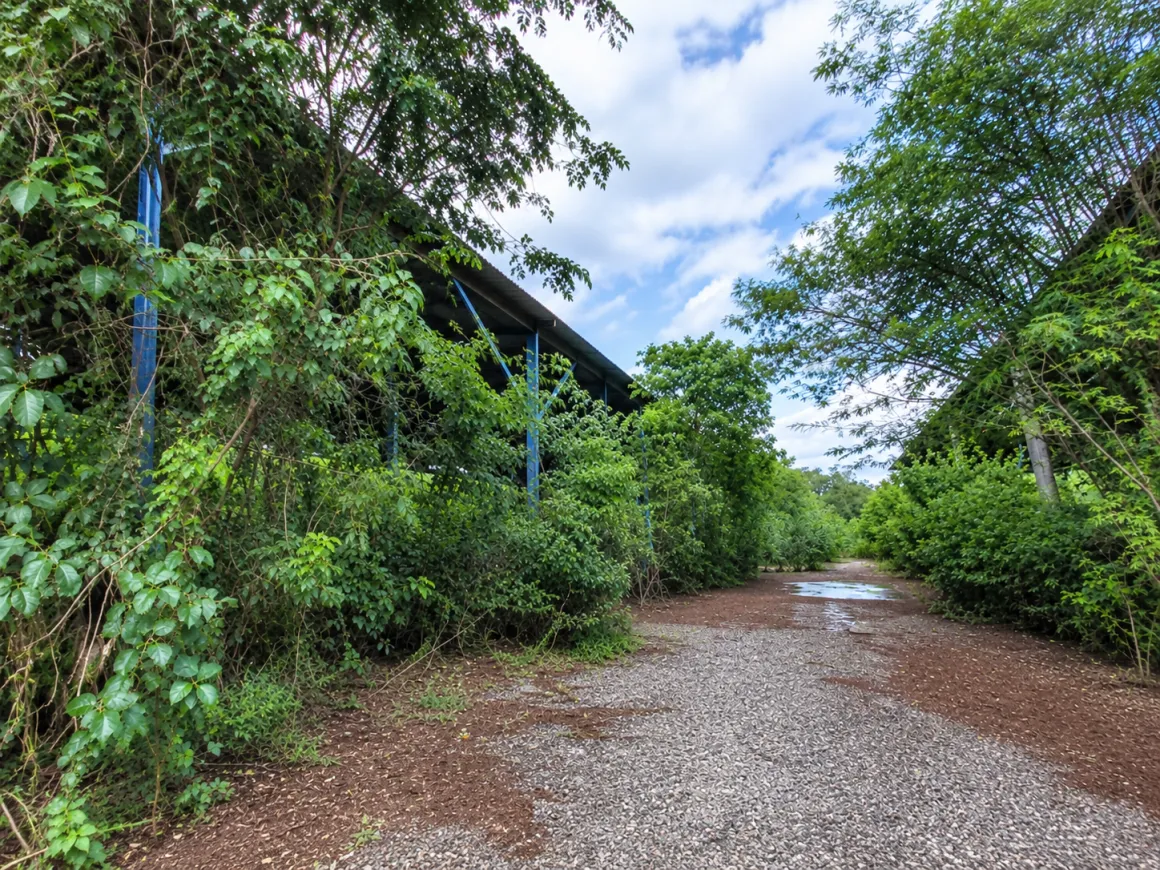
When United Nations Support Office in Haiti (UNSOH) engineers first arrived at Camp Vertières in Port-au-Prince, vegetation had taken over the site. Hidden beneath it were disused buildings, asphalt and paved roads, sections of drainage and partition walls that could still be used, all left behind by the United Nations Stabilization Mission in Haiti (MINUSTAH), which ended its mandate in 2017. Nearly a decade later, the site was selected for the Gang Suppression Force (GSF). UNSOH began preparing the area for the GSF’s arrival, transforming it into a functioning base that now supports hundreds of personnel.
Working against the clock
Under Security Council resolution 2793 (2025), UNSOH was required to assume responsibility for providing logistical support to the GSF within six months. Essential facilities and services at Camp Vertières therefore had to be ready by 1 April 2026, so that the GSF Headquarters could begin operating there. The security situation made access to the camp difficult, complicating the movement of workers and contractors. At times, they had to stay on site instead of travelling in and out each day. Faced with a tight deadline, UNSOH engineers looked first at what could be recovered, rehabilitated and reused rather than waiting for everything to arrive from abroad.
“When we first walked through, you couldn’t see the ground under the vegetation, let alone imagine a working base here,” said Juan Manuel Lopez-Palafox Velasco, Chief of Engineering at UNSOH. “We did not have time to wait for everything to arrive from abroad, so we had to look at what was already here and ask a very practical question: what can we reuse, what can we rehabilitate and what can we recover? That approach helped us establish the minimum capability needed for the deployment on time.”
Building the camp together
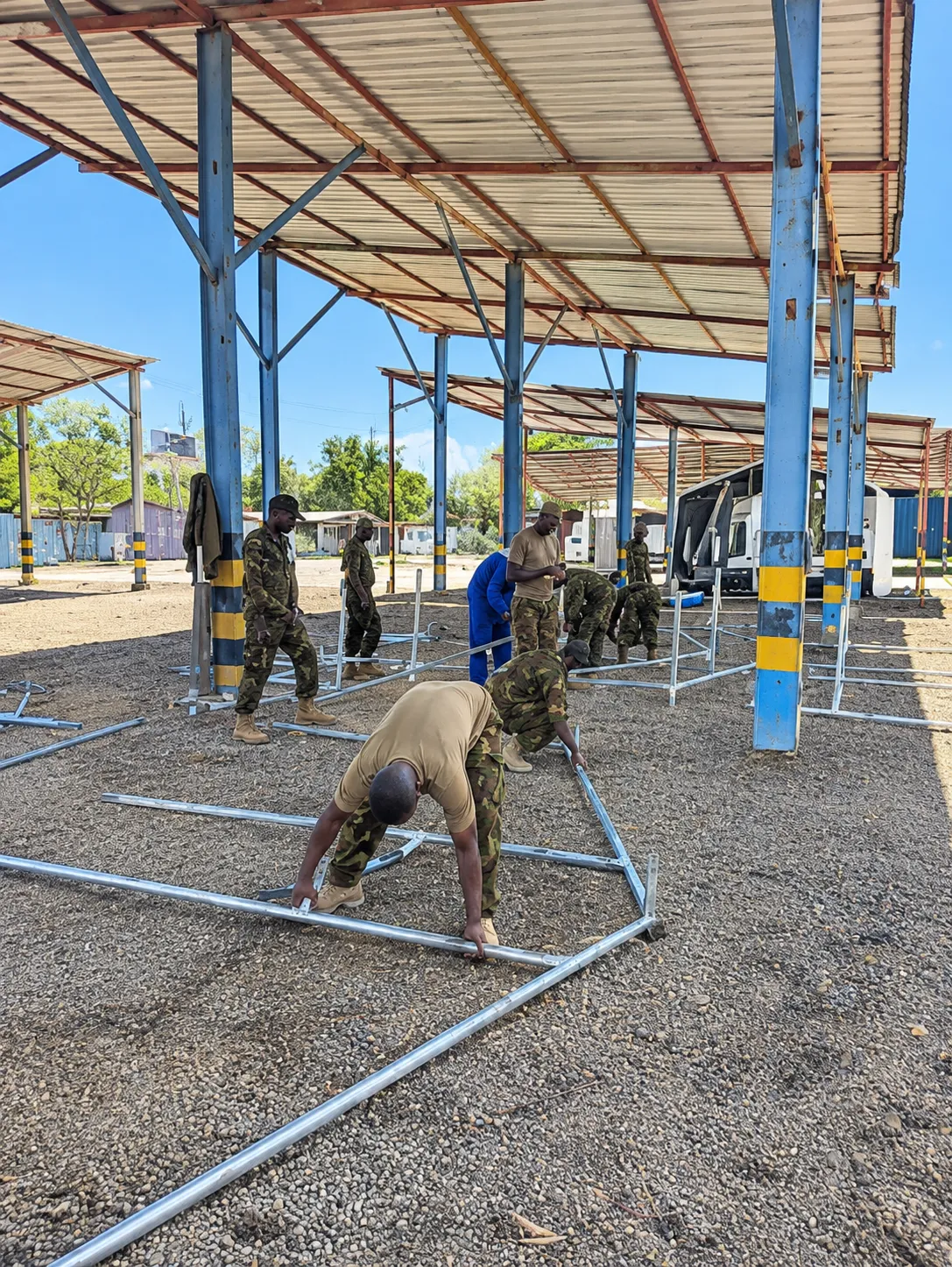
Camp Vertières is located within a military base belonging to the Haitian Armed Forces (FAd’H), whose support helped accelerate the work. One of the first priorities was to prepare accommodation for incoming personnel. With no dedicated teams available to assemble the structures at the time, UNSOH sought support from the FAd’H, which mobilized some 350 Haitian soldiers. Working in teams, they assembled the flooring, structures and coverings in five days. This joint effort prepared the camp for the GSF’s arrival, and improvements to the site also serve the soldiers based there.
An operational hub
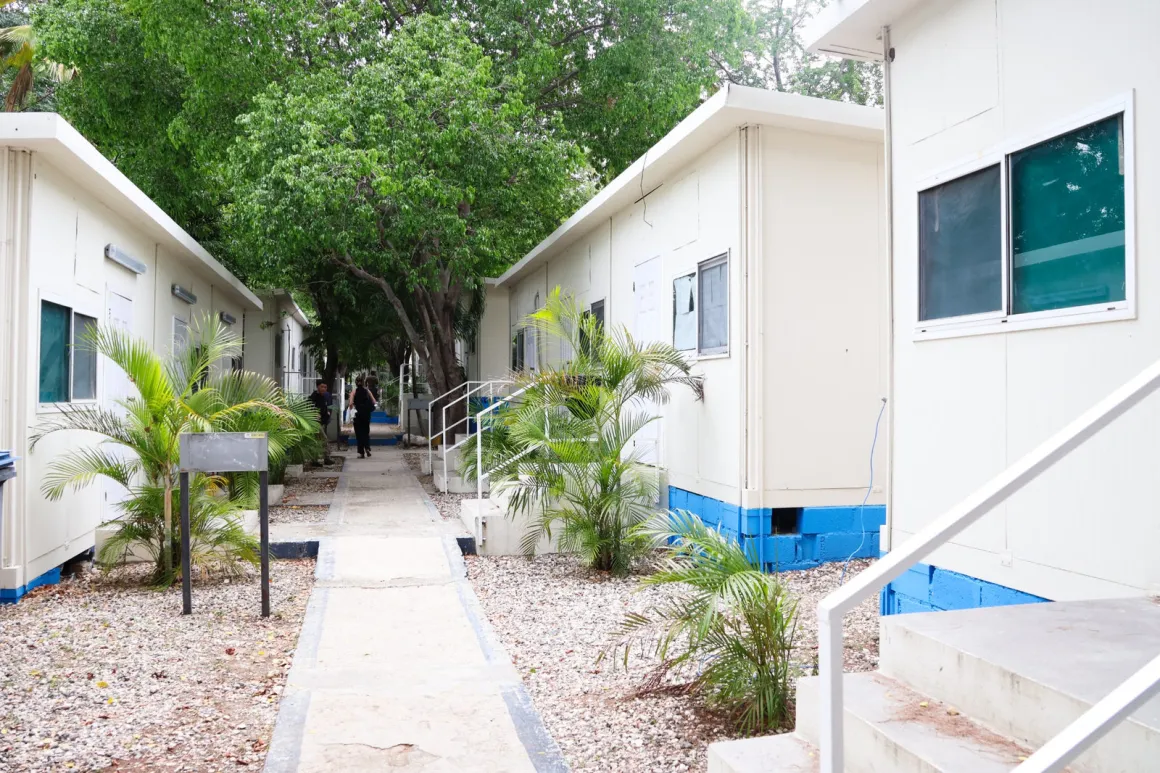
Camp Vertières now hosts the GSF’s principal operational hub and several of its contingents. A transit camp can accommodate approximately 500 GSF personnel arriving for training and deployment. Old buildings on the site have been converted into living quarters, classrooms, showers, toilets and laundry facilities, and an industrial kitchen prepares meals for up to 600 people a day. The building housing the GSF Joint Operations Centre has also been renovated, providing space for the GSF to plan and coordinate its activities.
The barracks of Haitian soldiers stationed at Vertières have been upgraded, with improved sanitation and separate facilities for women.
Building for the longer term
With the camp now operational, the focus is shifting from rapid solutions to a longer-term goal: infrastructure built to last. Plans include water systems designed to let water flow downhill, reducing the need for pumps. Improved wastewater treatment would allow treated water to be reused for gardening and dust control, while renewable energy and rainwater collection are being considered where appropriate.
Existing roads, drainage systems and mature trees are being preserved wherever possible. New facilities are being planned to avoid unnecessary reliance on complex imported equipment or repairs requiring specialist expertise. UNSOH is working with Haiti’s Ministry of Defence and the FAd’H toward that same longer-term goal: infrastructure that can be maintained locally and could also serve Haitian institutions in the future.
As UNSOH Chief of Engineering, Juan Manuel Lopez-Palafox put it: “Now the challenge is different: to progressively turn those initial solutions into durable, maintainable and environmentally responsible infrastructure that can ultimately leave something useful behind.”
In a matter of months, Camp Vertières has become a place where people live, train and plan operations, with foundations laid for the years ahead.


