


As the Security Council convenes its annual debate on Women, Peace and Security (WPS), Somalia offers a powerful example of what sustained support for women's participation can achieve, even in the most challenging contexts.
When the United Nations Transitional Assistance Mission in Somalia (UNTMIS) concludes its mandate at the end of October, it will leave behind more than a decade of engagement that helped move Somali women from the margins of political life toward the center of decision-making. The United Nations Assistance Mission in Somalia (UNSOM) and its successor UNTMIS have left an impact on the political arena in Somalia through the Somali women who negotiate local peace agreements, hold parliamentary seats, shape legislation, lead Government institutions and influence decisions that affect the future of their communities.
The Mission helped the Government of Somalia integrate measures to enhance women’s representation into the electoral law, advocated for women’s meaningful involvement in resolving political tensions, and supported women leaders as they entered Parliament. Through study visits to Nigeria, Rwanda, and Uganda, Somali women parliamentarians were able to draw inspiration and practical lessons from some of Africa’s most successful experiences in advancing women’s leadership and representation.
In 2012, women held 14 per cent of seats in Somalia's Parliament. By the 2016-2017 electoral cycle, that figure had risen to 24 per cent, almost doubling the number of women Parliamentarians. In 2022, Somalia elected its first woman as a Deputy Speaker of the House of the People. In 2024, the country incorporated a 30 per cent quota for women into its electoral legal framework, reflecting years of advocacy by Somali women, supported by the United Nations and its partners.
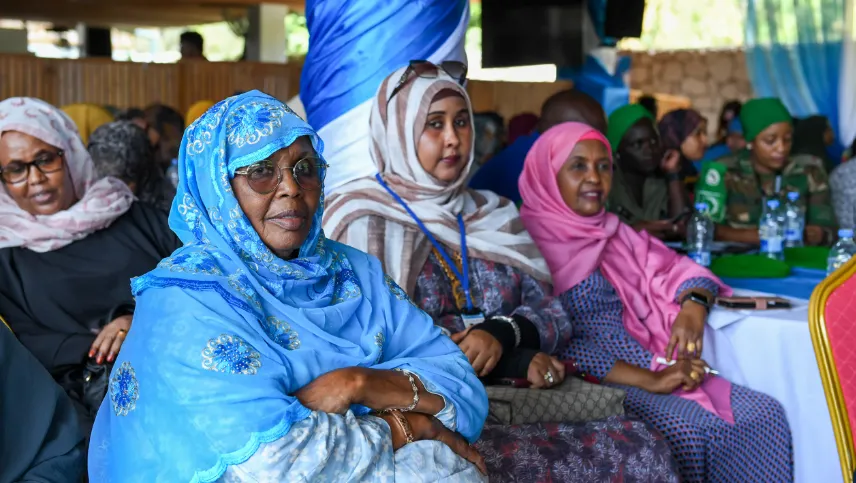
These gains have had consequences far beyond numbers. Women are no longer merely advocating from outside political processes; they are shaping them from within. Women mediators trained and supported over the past decade have helped resolve local disputes, reduce tensions, and build trust in communities affected by conflict. Networks of women leaders now operate across federal and state levels, providing a platform to influence political negotiations and national priorities. What was once exceptional has become increasingly expected: that women belong in the rooms where decisions about peace, security and governance are made.
Progress is also visible in efforts to protect women and girls. Today, survivors of sexual and gender-based violence have greater access to services and support than was available a decade ago. Women's peace networks have expanded the reach of early warning and community dialogue mechanisms. State authorities have adopted legislation prohibiting female genital mutilation in several Federal Member States, while national efforts to outlaw the practice continue to advance.
Yet these gains remain fragile. As UNTMIS departs, Somali women leaders have voiced concern not simply about the loss of a UN political presence, but about the potential loss of the advocacy, expertise and convening power that helped drive progress during critical political moments. Their concern reflects a hard reality: rights won are not always rights secured. Representation can decline. Political space can narrow. Reform can stall. Ensuring women's continued participation in decision-making will be essential in maintaining and advancing the gains achieved over the past decade.
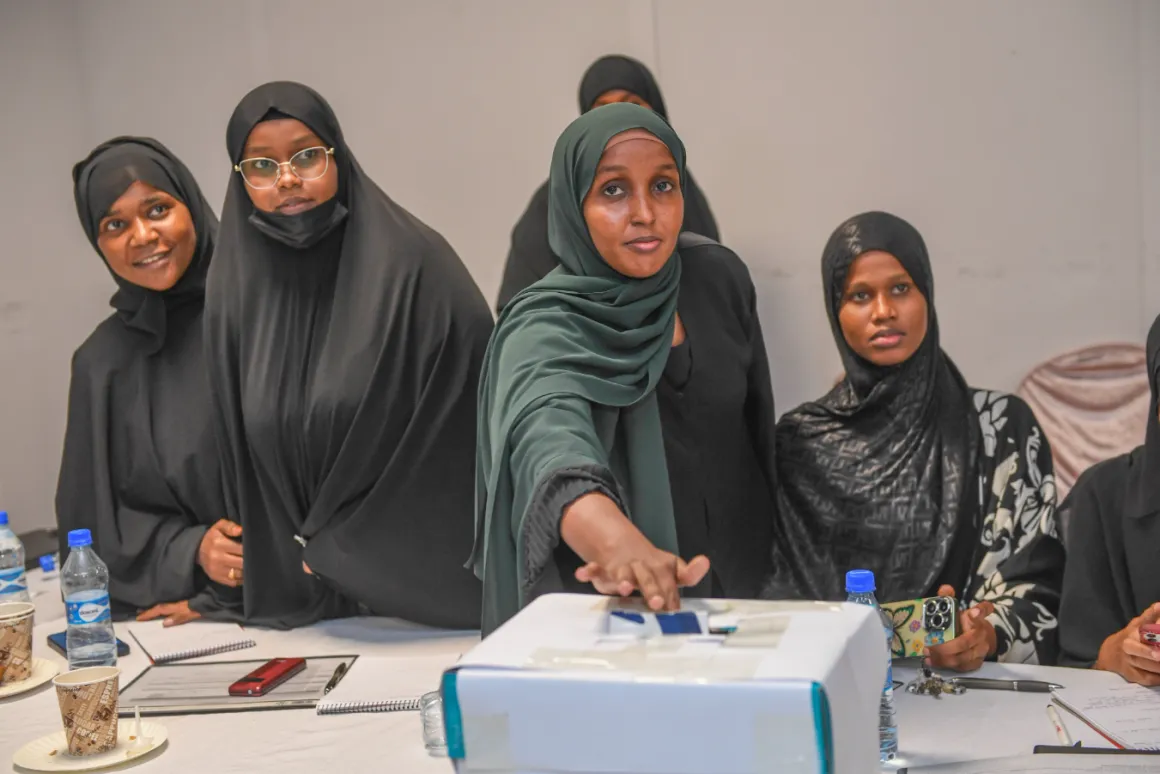
The challenge now is not only to preserve the achievements, but to protect the pathways that made them possible. The United Nations will remain engaged through the UN Country Team by building on existing coordination mechanisms and partnership with Somali institutions and civil society to support the implementation of the Women Peace and Security agenda.
Somalia's experience demonstrates that even in contexts marked by conflict, insecurity and entrenched barriers, progress on WPS is possible. It also demonstrates that such progress is not self-sustaining. In recent years the Federal Government of Somalia has invested in advancing the WPS agenda throughaction plans, and institutional reforms. Somali women's civil society organizations, networks and mediators have emerged as indispensable partners in promoting inclusion, and national and community-level peacebuilding, and will remain central to maintaining momentum during the post-transition period.
The women who secured a seat at the table must now continue to be supported to shape the decisions made around it. Ensuring that happens is essential not only for gender equality, but for the peace, stability and future of Somalia itself.


