


UN peacekeeping remains a critical tool for international peace and security, but its future success will depend on the willingness of Member States to sustain political and financial support.
Every year in September, heads of state and government, foreign ministers and other senior officials from around the world gather in New York City for the High-level Week of the UN General Assembly (UNGA).
During the General Debate, representatives of Member States, as well as the European Union, the State of Palestine and the Holy See, present their views on some of the world’s most pressing challenges, including peace and security, human rights, development, the environment and international cooperation.
This year’s 81st session took place against the backdrop of an unprecedented liquidity crisis, including significant pressure on the UN peacekeeping budget. Last August, in response to the Pact for the Future, UN Secretary-General António Guterres conducted a review on the future of all forms of United Nations peace operations. The report highlighted the importance of UN peacekeeping in maintaining international peace and security, while acknowledging the need for UN peace operations to adapt to increasingly complex environments through more focused mandates, stronger partnerships with host countries and predictable, adequate and sustained financing.
So, what did Member States say about UN peacekeeping this year?
More financing for peacekeeping is needed.
One of the most frequent messages from Member States during the UNGA debate was the need for sustainable and predictable financing for UN peacekeeping, with several warning that budget cuts could reduce missions’ ability to deliver on their mandates.
Faustin Archange Touadera, Head of State of the Central African Republic, emphasized “peacekeeping operations, including in [his] own country, have been forced to cut back their patrols, shut down bases, and suspend local dialogue initiatives. Each budget cut adopted in New York or in some faraway capital is an opportunity for armed groups on the ground.”
Barbados Prime Minister, Mia Amor Mottley, emphasized these concerns: “Transformation and development, peacekeeping and humanitarian aid cannot succeed if Member States are unwilling to fund it.”
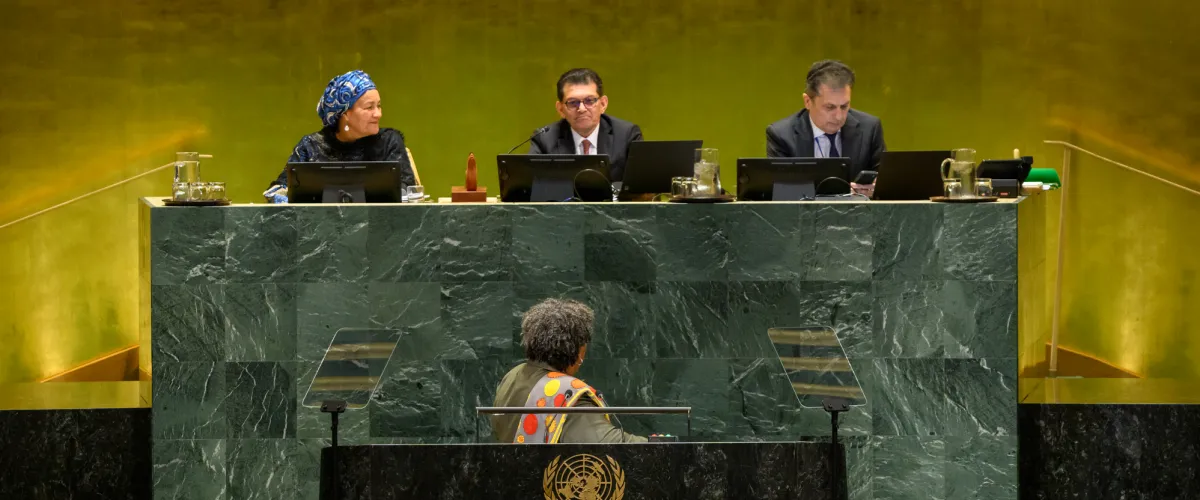
The call for adequate financing was also echoed by France, a permanent member of the Security Council. “Peace operations must be more effective and to this end they must be enabled, endowed with adequate funding and better coordinated,” said President Emmanuel Macron.
Gabon, Poland, Portugal, Romania, and Zimbabwe also called for stable and adequate funding for peacekeeping operations to support more effective missions and sustainable peace.
Strong support for UN peacekeeping.
Many Member States that spoke about UN peacekeeping also highlighted their own countries’ military and police contributions around the world.
Bangladesh, Cambodia, China, Guatemala, India, Indonesia, Mongolia, Pakistan and the Soloman Islands all emphasized their personnel contributions to UN peacekeeping missions—military, police and civilian.
Feleti Teo, Prime Minister of Tuvalu, made an impactful statement: “This year also marks the historical and first deployment of Tuvalu police officers to serve in the UN Mission in South Sudan, a deployment that confirms that even the smallest member of the UN can contribute meaningfully to international peace and security.”
Other leaders reflected more broadly on the value of peacekeeping and the service of those deployed under the UN flag, often at great personal cost.
President of Uruguay, Yamandú Orsi, said: “Uruguayan men and women can bear witness to the value of this instrument in easing suffering and guaranteeing respect for the human lives of the most defenseless populations.”
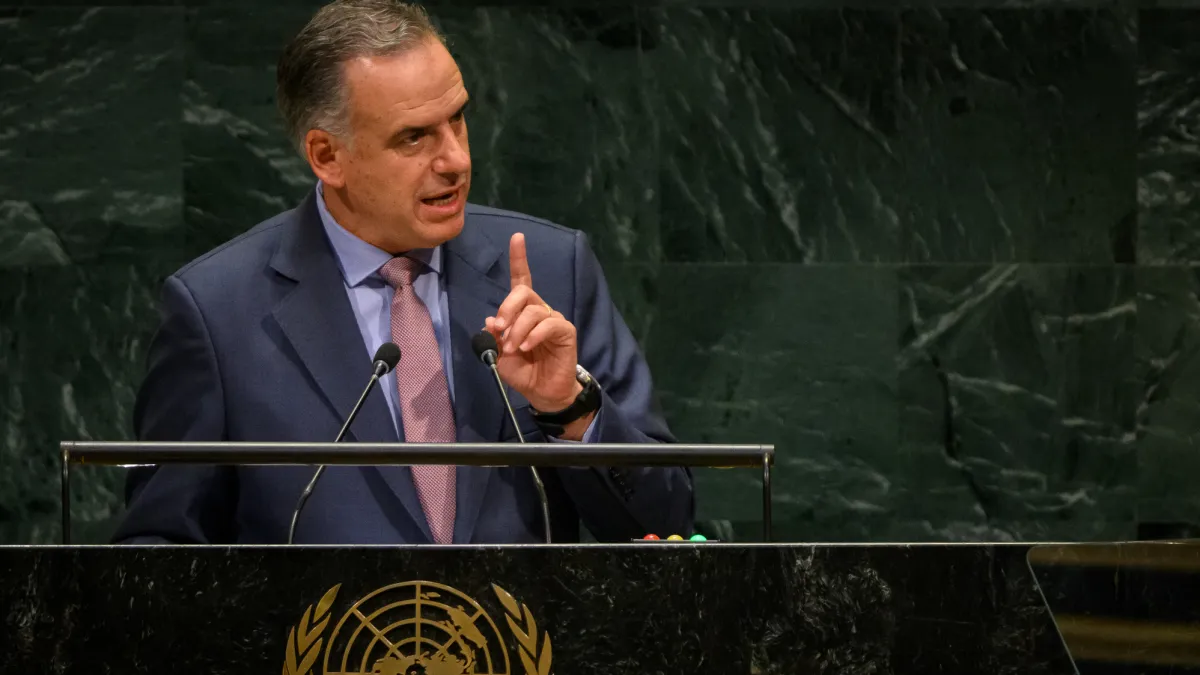
William Samoei Ruto, President of Kenya, acknowledged the important work of all UN peacekeepers highlighting “More than two million peacekeepers have served under the UN flag, proving that peace can be built, protected and sustained.”
While many Member States noted the service of their personnel serving in peacekeeping, several nations including Brunei Darussalam, Ireland and Lebanon paid tribute to the UN peacekeepers who lost their lives serving under the blue flag.
Nawaf Salam, President of the Council of Ministers of Lebanon, heartfully thanked all those who have served in the United Nations Interim Force in Lebanon (UNIFIL), whose mandate ends at the end of the year. “I must pay tribute to the role played by the United Nations Interim Force in Lebanon, UNIFIL, and to the courage of its leadership, personnel and staff and their sacrifices in preserving stability, supporting the Lebanese Armed forces and implementing resolution 1701,” he said.
"To all the countries that have contributed troops to this force, Lebanon extends its profound thanks and appreciation,” he added.
The importance of women in UN peacekeeping.
The role of women in peacekeeping was also prominent in the debate.
Setting the stage with his opening remarks, Secretary-General António Guterres emphasized that “peace is more durable when women are at the table.”
Khurelsukh Ukhnaa, President of Mongolia, underscored his country’s commitment to the Women, Peace and Security (WPS) agenda and increasing women’s participation in peacekeeping.
“Mongolia has been actively advancing the implementation of United Nations Security Council resolution 1325,” he stressed, adding that his country has become one of the few to have reached 15 percent women’s participation and representation among its military personnel serving in UN peacekeeping operations.
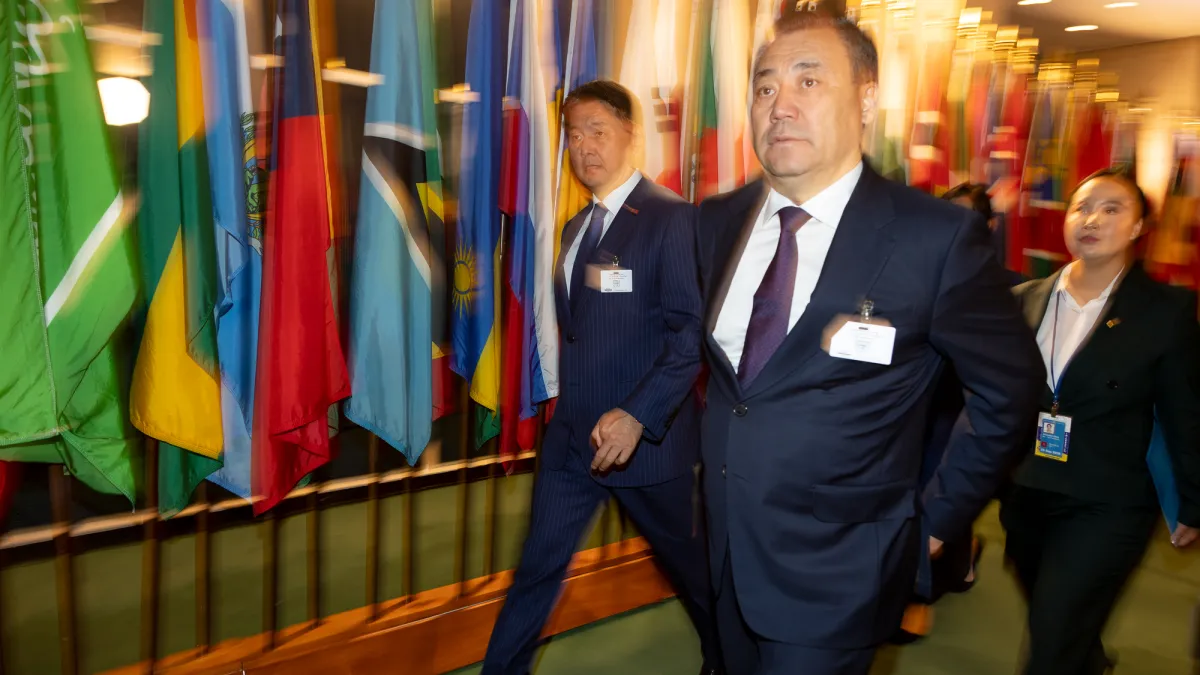
Prime Minister of Bangladesh, Tarique Rahman, stated his nations support noting “The courageous participation of Bangladeshi women in peacekeeping missions, even under adverse circumstances, reflects our strong commitment to advancing the agenda of Women, Peace and Security.”
In reflections of post-conflict settings, President of Namibia Netumbo Nandi-Ndaitwah praised the positive impact of the WPS agenda, explaining it “has contributed positively to the rehabilitation, reconciliation, and reintegration efforts in conflict-affected regions, serving as a core framework for stabilizing post-conflict situations.”
Luxembourg and Tunisia also highlighted the importance of gender inclusion and its impact on peace.
Building sustainable peace and national capacity
Another key topic of discussion at the general debate was the need for capacity building in peacekeeping to support missions in transition. This included more institution strengthening, peacebuilding and support for long-term national ownership.
The Permanent Representative of South Sudan to the United Nations, Cecilia Adout Majok Adeng, emphasized “the objective must be a South Sudan capable of sustaining its own peace."
Mohamed Ali Nafti, Minister of Foreign Affairs, Migration and Tunisians abroad, shared that his country “firmly believes that peace operations cannot be limited to crisis management and conflict containment, but must contribute to creating the conditions conducive to building sustainable peace, through supporting State institutions, strengthening the rule of law, empowering local communities and promoting development.”
Among the issues highlighted by host countries was the need for sustained international support as UN peacekeeping missions draw down and eventually depart. This included the Central African Republic (CAR) that hosts the United Nations Multidimensional Integrated Stabilization Mission in the Central African Republic (MINUSCA) and Lebanon which hosts UNIFIL.
“The Central African Republic, like all sovereign nations, aspires to take full charge of its own security,” said Faustin Archange Touadéra, Head of State. “And I say this with the same gravity: Any drawdown of MINUSCA ought to be gradual, based upon objective and agreed criteria, and not be based on an arbitrary timeline untethered from realities on the ground.”
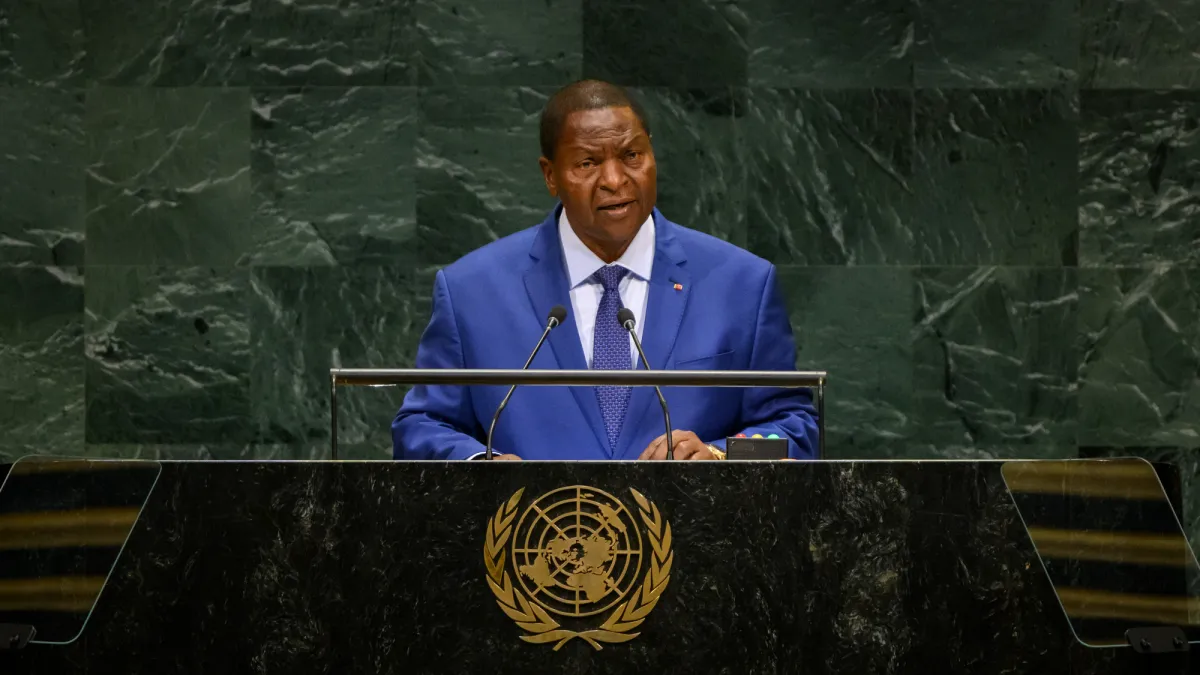
Similarly, Lebanon’s President of the Council of Ministers, Nawaf Salam, stressed the need "to avert the vacuum that UNIFIL's withdrawal could create,” noting the Security Council’s decision to end the mission’s operations and begin its gradual withdrawal, and calling for agreement on “a new international force to replace it.” Last June, the Secretary-General sent a letter to the Security Council outlining options for the continued implementation of resolution 1701 following UNIFIL’s withdrawal.
This year’s UNGA High-level Week demonstrated that, despite the financial crisis facing the UN, Member States continue to look to the Organization as an essential forum for multilateral cooperation and collective action.
At a moment when conflicts are growing more complex and the UN is facing a serious liquidity crisis, the message from the 81st UNGA debate was clear: UN peacekeeping remains a critical tool for international peace and security, but its future success will depend on the willingness of Member States to sustain political and financial support.
Member States must invest in peace.
By: Elizabeth McInnes


