DPPA
政治与建设和平事务部

规划、监测和评价

政治建和部2020-2022年战略计划

2020年1月,政治建和部推出新的2020-2022年战略计划,这是自重组和平与安全支柱以来的第一个战略计划。政治建和部的战略计划与联合国和平与安全支柱的共同愿景相辅相成,遵循整体方法,努力实现预防和维持和平的首要目标。

该战略计划以大会核定的方案计划为基础,与会员国、联合国外地存在以及政治建和部领导和工作人员在总部和外地密切协商后制定。

该战略计划旨在为政治建和部提供实用指南,重点关注关键的中期优先事项,包括五个要素:

新计划纳入了从上一个战略计划(2016-2019年)评价中吸取的经验教训,包括三个目标,涉及七个相互关联的战略目标。
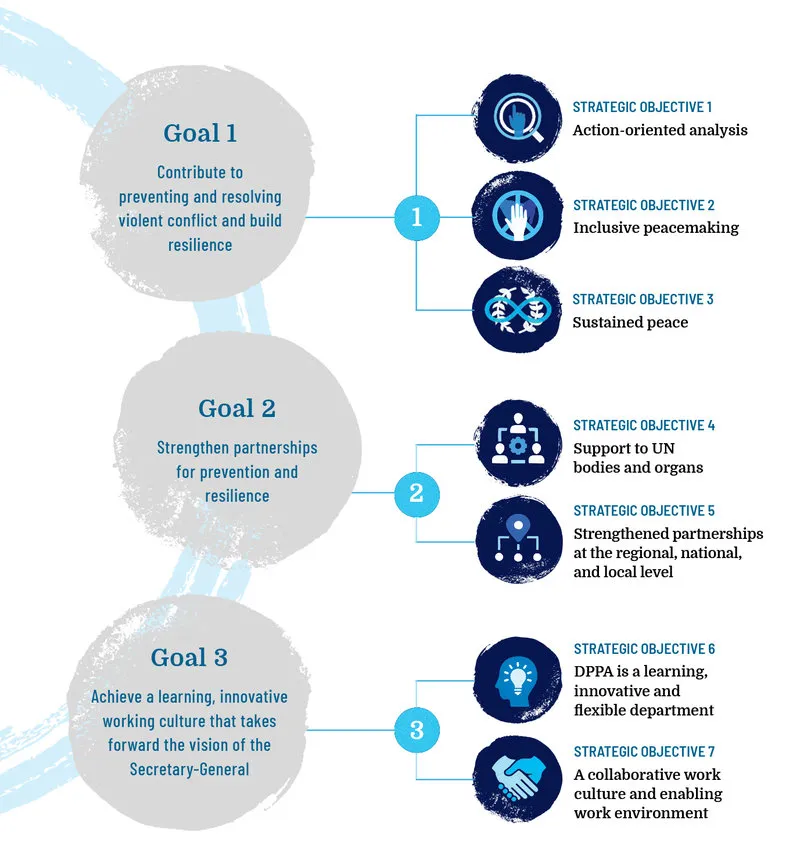
变革理论

政治建和部的战略计划基于以下变化理论:

如果政治建和部根据贯穿各领域的分析部署其全部资源,与联合国系统内其他部门合作,并与区域、国家和地方利益攸关方结成伙伴关系,同时利用致力于学习和创新的内部文化,则将为预防和解决暴力冲突以及可持续和平作出贡献。

战略计划的实施

各司通过工作计划将战略计划付诸实施,并利用工作计划将战略计划的中期目标转化为年度优先事项。这些工作计划作为重要的管理工具,被用作定期报告政治建和部如何实现战略计划所列目标的基础。


监测和报告

政治建和部的战略计划附有一个成果框架,以协助监测和评价该部2020-2022年期间的业绩。该成果框架不仅可用于跟踪成果,而且还用于支持政治建和部各司的横向协调规划。通过关键绩效指标衡量政治建和部对预防冲突和维持和平的贡献。新的成果框架首次引入质化问题,这将有助于更好地把握其在预防冲突、建立和平、建设和平和维持和平方面的影响。通过年中和年度审查,政治建和部将对照质化和量化指标跟踪进展情况,以便进行必要纠正。

除了内部监测,政治建和部还跟踪联合国内部监督事务厅(监督厅)、联合检查组(联检组)和联合国审计委员会等若干外部监督机构提出的建议。

评价

秘书长改革的核心是提高任务交付效力、提高透明度、加强成果问责制。改革的重点是高级管理层加强联合国问责机制、支持成果管理制、建立强大自我评价文化的领导力。为此,政治建和部致力于确保将成果管理制和自我评价纳入部内工作。

为了问责和学习,政治建和部开展行动后审查、经验教训研究和自我评价等评价活动。所有评估和经验教训研究都根据政治建和部的年度《学习和评价计划》进行。

作为联合国评价小组成员,政治建和部遵守其规范和标准。如果无法分享报告全文,政治建和部将本着透明的精神,系统地传播其自我评价和经验教训研究的执行摘要。政治建和部还承诺跟踪其自我评价所提各项建议的执行情况。

政治建和部-和平行动部和平与安全支柱指南制定和学习指导联合委员会是执行政治建和部评价政策,审查评价工作优先事项并监测政治建和部自我评价所提建议执行情况的管理机制。

Our strategic direction

DPPA's Strategic Plan sets out the Department's priorities and objectives, providing a common framework for its work at Headquarters and in the field.

The Strategic Plan 2023-2026 is accompanied by a Results Framework that defines expected outcomes and indicators to assess progress. Together, these tools guide departmental planning, support coordination and help translate strategic priorities into action.


Theory of Change
If DPPA deploys the full range of its resources based on cross-cutting analysis, in collaboration with others within the UN system and in partnerships with regional, national, and local stakeholders, drawing on an internal culture shaped by a commitment to learning and innovation, it will contribute to the prevention and resolution of violent conflict and to sustainable peace.

Implementation and monitoring

Divisional work plans translate the Strategic Plan's medium-term objectives into annual priorities, guiding the Department's activities at Headquarters and in the field. Implementation is supported by resources from the United Nations regular budget and voluntary contributions through DPPA's Multi-Year Appeal (MYA).

DPPA monitors progress against its Results Framework, using qualitative and quantitative indicators to assess performance and inform decision-making.

Recognizing that the outcomes of preventive diplomacy, mediation and peacebuilding often emerge over time and involve multiple actors, the Department combines performance data with qualitative analysis to better understand its contribution to conflict prevention and sustaining peace.

Explore the Strategic Plan and the Multi-Year Appeal:

Measuring progress

DPPA monitors its performance against the Results Framework, using qualitative and quantitative indicators to assess progress towards its strategic objectives.

Recognizing that the results of preventive diplomacy, mediation and peacebuilding often emerge over time and depend on the contributions of multiple actors, the Department combines performance data with qualitative analysis to better understand its contribution to conflict prevention and sustaining peace.

DPPA also monitors the implementation of recommendations from evaluations and audits conducted by external oversight bodies, including the UN Office of Internal Oversight Services (OIOS), the Joint Inspection Unit (JIU) and the UN Board of Auditors.

Evaluation and learning

DPPA conducts evaluations and learning exercises to assess the effectiveness of its work, identify lessons and strengthen accountability. These include self-evaluations, After-Action Reviews and Lessons Learned studies, guided by the Department's annual Learning and Evaluation Plan.

In line with the norms and standards of the United Nations Evaluation Group (UNEG), DPPA promotes transparency by sharing evaluation findings and tracking the implementation of recommendations. This includes recommendations from evaluations and audits conducted by external oversight bodies, such as the UN Office of Internal Oversight Services (OIOS), the Joint Inspection Unit (JIU) and the UN Board of Auditors.

The joint DPPA-DPO Guidance Development and Learning Steering Committee oversees evaluation priorities, policies and follow-up on recommendations, supporting continuous learning and improvement across the peace and security pillar.

Explore evaluative exercises reports.

Last updated:
Share